An intumescent material is a specialized product that reacts to the heat of a fire by expanding rapidly, sealing the opening it protects and holding back the spread of flame, smoke, and heat. That single property sits behind a large part of modern passive fire protection, from the cavities inside a rainscreen facade to the penetrations that carry pipes and cables through a rated wall.
Openings are the weak point in almost every building. When an opening is left unprotected, it can act like a match to gasoline, letting a small fire spread quickly from one compartment to the next. Building codes require these openings to be closed with fire-resistance rated solutions, and intumescents have become one of the most effective ways to meet that requirement without giving up ventilation, movement, or design freedom. This guide explains what an intumescent material is, how it works, what it is composed of, and where it is used.
What Is an Intumescent Material?
An intumescent is a material that reacts and expands aggressively when exposed to heat or fire. Depending on the formulation, an intumescent material can expand up to 30 times its original size, and the pressure it generates as it grows can be tuned for the job it has to do. Once it has expanded, it leaves behind a durable, solid char that blocks the passage of fire, heat, and smoke for extended periods.
Because the reaction is triggered by heat, the material stays compact and unobtrusive during normal use and only activates when a fire raises the temperature around it. For a plain-language primer before going further, our overview of what an intumescent is covers the basics, and the full intumescent materials range shows how the technology is packaged into finished products.
How Intumescent Materials Work: The Science of Expansion
Intumescent materials work through a chemical reaction that turns a thin, stable layer into a thick, insulating barrier. At room temperature the material is inert and takes up very little space. When the heat of a fire reaches it, that heat drives a reaction inside the material that releases gas and causes the solid to swell far beyond its original thickness. The result is an expanded carbonaceous char: a low-density, foam-like layer of carbon that seals the gap and slows the transfer of heat to the other side.
Two things make this behavior valuable. First, the char is not just a plug. It insulates, so it protects the structure or assembly behind it while it holds back flame and smoke. Second, the expansion happens on demand. An intumescent fireblock can sit flush inside a ventilated cavity and let air move freely, then expand and solidify across the opening only when a fire breaks out. Traditional materials such as mineral wool and gypsum board cannot do this. They are fixed in place, so in an application that needs movement or airflow, such as a ventilated air cavity, mineral wool would simply block off part of the cavity. An intumescent solution keeps the cavity working as designed until the moment protection is needed.
What Intumescents Are Made Of
Not all intumescents share the same chemistry. Tenmat’s intumescent technology is graphite-based and halogen-free, which means it produces a stable, insulating char without relying on halogenated additives. Graphite-based intumescents are valued for the strength and consistency of the char they form.
Formulations also differ in how far and how forcefully they expand. Some products are engineered for very high expansion, on the order of 30 to 1, so they can close large or awkward gaps. Others expand in a slower, controlled way, closer to 5 to 1, so they can be used without extra restraint. Expansion can also be directed. A rigid, uni-directional material pushes its char in a single, predictable direction, which matters when an installer needs the char to form across an opening rather than in every direction at once.
Where Intumescent Materials Are Used in Construction
Intumescent materials appear across the whole of a building’s passive fire strategy. Common applications include:
- Fire-rated ceiling and floor assemblies
- Fire-rated walls and doors
- Plastic pipes and ducting that pass through rated construction
- Electrical and mechanical penetrations
- Structural steel protection
- Ventilated rainscreen cavities and other through-penetration openings
The same technology scales across building types. Intumescents are specified in high-rise commercial buildings, industrial facilities, multi-family residential, mass timber and modular construction, and in sectors such as healthcare, education, and data centers. Our applications overview and its mass timber pages show how the materials are matched to each setting.
Fireblocking, Firestopping, and Fire-Rated Vents
Intumescent materials show up in three related but distinct jobs, and it helps to keep them straight. Fireblocking closes concealed spaces, such as the cavity behind a rainscreen or the void inside a wall, so flame cannot travel unseen through the structure. Firestopping seals penetrations where a pipe, cable, or duct passes through a fire-rated wall or floor. In the United States, the International Building Code sets out where each is required, and through-penetration firestop systems are tested to standards such as ASTM E814 and UL 1479. Exterior wall assemblies that include combustible components are evaluated to NFPA 285.
The ventilated rainscreen shows why intumescents suit this work. A conventional mineral wool barrier would block part of the ventilation gap. Tenmat’s rainscreen fireblock, by contrast, sits flush with the cavity and only expands to close the opening when a fire starts, so the wall keeps venting moisture in everyday use. Ventilation openings raise a similar challenge, and our fire-rated vents are designed to protect them, an important consideration in wildfire-exposed areas. For sealing services through rated construction, Tenmat’s firestop foams, sealants, and blocks apply the technology to penetrations.
Choosing the Right Intumescent Material
Because jobs differ, so do the materials. We offer a range of intumescents, each with a different balance of flexibility, expansion rate, and char strength:
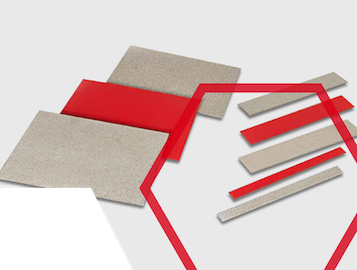
FF102
FF102 is a rigid, graphite-based, halogen-free intumescent with strong, uni-directional expansion. It is used for cavity barriers, door and glazing systems, ventilated rainscreen firestops, and gap sealing. – this link here doesn’t appear in red
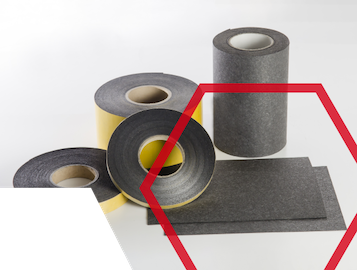
FF104E is a flexible, dark gray intumescent paper with a 20 to 1 expansion ratio that can be rolled and folded into complex shapes. It suits offsite construction joints, electric vehicle battery protection, concrete gap seals, and gasket applications.
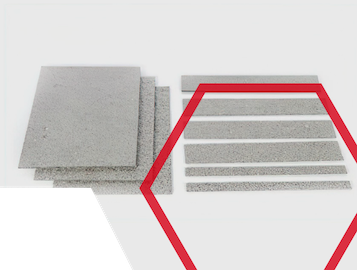
FF107 is a fast-reacting material with a 30 to 1 expansion ratio, popular for mass timber firestopping as well as cavity barriers, penetration seals, pipe and duct wraps, fire collars, and electrical socket protection.
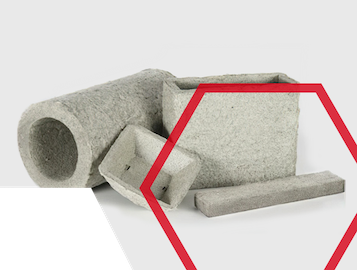
FF109 is a compressible, vacuum-formed material with a 5 to 1 expansion ratio that can be produced in sheets or in 2D and 3D shapes. It is the basis for fire-rated light and speaker covers.
Matching the material to the application is where specification expertise pays off, and it is worth confirming the right choice with the manufacturer before a detail is finalized.
Why Intumescents Matter for Life Safety
Passive fire protection works quietly. It is built into the structure and does nothing at all until a fire tests it. Intumescents fit that role well because they stay out of the way until heat calls them into action, then expand to buy the time that lets people evacuate and gives the fire service room to work. Tenmat has developed intumescent technology for several decades, and that experience is built into products designed to meet increasingly demanding safety standards. To discuss the right intumescent material for a project, contact the team through the website, call +1 (800) 821-3436, or email info@tenmatusa.com.