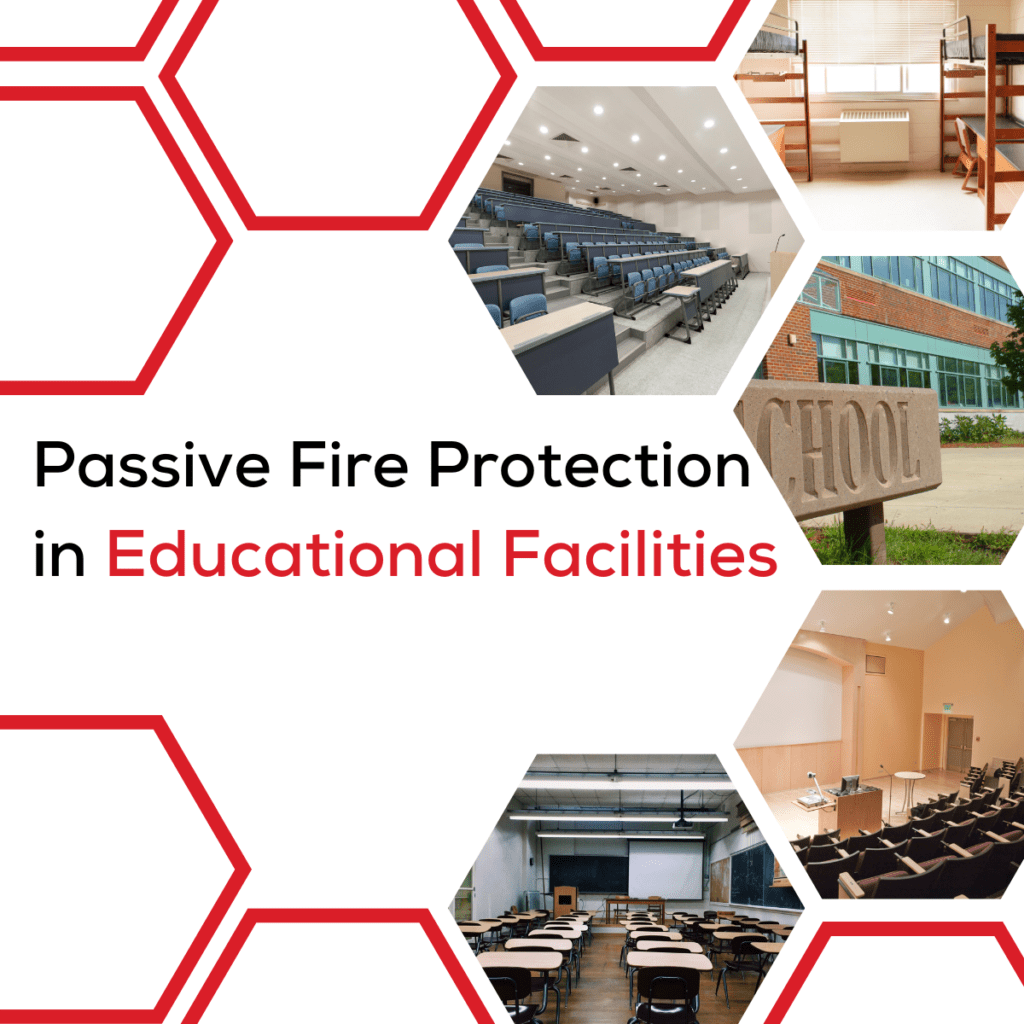
Explore why architects are integrating passive fire protection systems into new construction education projects.
Understanding the Demand for Passive Fire Protection in Educational Facilities
As college campuses continue to grow and old elementary schools needing major upgrades, new construction has been booming in the education sector. As a result, the demand for passive fire protection has also increased. Whether you are focusing on a relighting project or just breaking ground, it is important to ensure your project is fitted with the appropriate type and volume of passive fire protection.
By fitting your project with passive fire protection, you aren’t just complying with stringent building codes. You are also protecting the lives and knowledge of our community’s future generations.
Beyond the Flames: Demystifying Passive Fire Protection
Passive fire protection is a defensive strategy when comes to facing fire outbreaks. Unlike active fire protection systems that require human intervention, passive measures are inherently built into the architecture. Therefore, when it matters most, passive fire protection automatically responds. Types of passive fire protection includes fire-resistant materials, specialized doors, and enclosures designed to contain and slow down flame and smoke progression. Acting as proactive solution, passive fire protection permits an extension for the most valuable element – time.
With its ability to contain and slow down flame spread, passive fire protection acts as a crucial barrier in the protection of lives and property. This barrier allows for a prolonged response time for both the buildings’ occupants and first-responders. These additional seconds, minutes allow for more individuals to evacuate safely. Plus, allowing firefighters additional time to contain a fire before it continues to spread throughout a building.
In the chaotic atmosphere of a fire, every second counts. By incorporating passive fire protection solutions and materials will make those seconds count.
Guardians of Learning: Identifying Key Areas for Passive Fire Protection
One of the primary contributors to the rapid expansion of flame spread lies with unprotected ceiling openings. And particularly those caused by recessed light fixtures in fire-resistance rated ceiling/floor assemblies. These openings create avenues for the swift dissemination of flames and smoke throughout the structure. This reaction poses a serious threat to the safety of its occupants. The implementation of passive fire protection solutions diminishes this risk. A fire-rated enclosure, designed with materials like fire-rated drywall, mineral wool, or intumescent technology, acts as a safeguard by compartmentalizing the smoke and flames.
In addition to the vulnerability posed by unprotected recessed light openings, in-ceiling loudspeakers also contribute to the rapid spread of fire outbreaks. Given the essential role of Public Address (PA) systems in large facilities like K12 schools and university learning centers, in-ceiling loudspeakers are prevalent within these academic buildings. However, the integration of audio-visual (A/V) technology introduces additional pathways for flames, heat, and smoke to traverse. Therefore, it becomes important to reinstate these penetrations with passive fire protection.
Apart from the risk associated with unprotected ceiling openings in fire-rated ceiling/floor assemblies, the concern of through-penetration openings arises. These openings create potential channels for the uncontrolled pathway of a fire. To address this hazard, fire-rated plugs, blocks, caulks, and sealants are fitted into these openings. These solutions eliminate the smallest of pathways for flames and smoke.
In the Lab and Beyond: Cutting-Edge Technologies for Passive Fire Protection
As the demand for passive fire protection in educational institutions rises, a multitude of passive fire protection solutions have entered the market. Some of these solutions include:
Metal Fire-Rated Enclosures:
Passive fire protection solutions, such as fire-rated enclosures, are widely employed for safeguarding unprotected ceiling openings. While available in diverse sizes and compositions like mineral wool or intumescent material, a drawback lies in their limited adaptability. Many of these solutions lack the flexibility for easy installation, making them less accommodating for various lighting fixtures and in-ceiling loudspeakers, irrespective of model or manufacturer.
Fire-Rated Drywall Boxes:
Initially a cornerstone of passive fire protection, fire-rated drywall boxes face challenges due to labor-intensive installation processes and high associated costs. This traditional approach, while effective, is deemed less practical by many architects and contractors who seek more efficient and budget-friendly alternatives.
Fire-Rated Lights
Despite technological advancements, fire-rated lights have entered the passive fire protection market with some reservations. The intricacies in installation and maintenance present challenges for architects and contractors. Moreover, the limited aesthetic options of fire-rated lights may not align with the design preferences of new-construction educational facilities, potentially posing a drawback in their widespread adoption.
Intumescent Technology
Intumescent technology emerges as a versatile solution for fire-rating unprotected ceiling openings and through-penetration applications. With its adaptable, lightweight composition and added audio protection properties, intumescent technology stands out as a universal and efficient choice for a wide range of passive fire protection applications.
In addition to all of these available solutions is IMPORTANT to ensure they are fire tested and approved by a trusted third-party laboratory such as UL Solutions. To further learn about the importance of fire tested and approved passive fire protection solutions, please visit The Influence of Recessed Luminaires in Fire Resistive Assemblies | UL Solutions.
Smart Choices, Safer Spaces: Finding the All-In-One Passive Fire Protection Solution for Educational Facilities.
Here at Tenmat, our research and development team are dedicated to facing the opposing challenges of passive fire protection in education applications. All of our passive fire protection solutions are designed with the latest intumescent technology and have been fire tested by independent third-party labs such as UL and Intertek. Here are some of the key applications for educational facilities:
- FF130 – 2’x2’, 1 Hour Fire Rated Troffer Cover
- FF130 – 2’x4’, 1 Hour Fire Rated Troffer Cover
- FF109X, 2 Hour Fire Rated Recessed Light Cover
- FF109-FRSC, 1 Hour Fire Rated Speaker Cover
- FF160 Fire Protection Plug
- FF260 Fire Protection Block
- FF360 Fire Protection Foam
- FF365 Fire Protection Sealant
If you are looking for an intumescent solution not listed, please reach out to one of Tenmat’s team members at +1-800-821-3436 for further assistance.
A Secure Future: Crafting a Blueprint for Passive Fire Protection in Education
In conclusion, the imperative demand for passive fire protection in educational facilities underscores the need for innovative solutions to ensure the safety of students, faculty, and infrastructure. The multifaceted challenges posed by unprotected ceiling openings, in-ceiling loudspeakers, and through-penetration openings necessitate comprehensive strategies for fire resilience. While various solutions exist in the market, Tenmat emerges as a standout provider. By offering a range of fire-tested and approved products, Tenmat’s Intumescents are ideal solution for new construction applications. From fire-rated troffer covers to customizable intumescent solutions, Tenmat’s commitment to research and development reflects a dedication to meeting the evolving needs of educational environments.For those navigating the critical landscape of passive fire protection, Tenmat stands as a reliable partner, offering a suite of solutions meticulously designed to address the unique challenges of educational structures.