Understand the different criteria in a modern façade application that would trigger the requirements for fireblocking in exterior wall covering assemblies.
When constructing ventilated rainscreens, these systems are required to maintain a proper balance – a balance between high performance and fire protection.
The air cavity in a ventilated rainscreen systems can promote both proper water drainage and air ventilation. With these high-performing benefits, ventilated rainscreens allow architects to create a design built to improve a building’s 1) moisture control and 2) energy levels.
The cavity also introduces an additional “concealed space” in the wall system. To address this balance and ensure life safety is maintained at the highest level, ventilated rainscreen cavities are required to have protection when a fire outbreak occurs.
What are the current standards of fireblocking in the United States?
In the United States, fire performance in rainscreens already have a host of requirements. A large portion of architects, developers, and engineers are familiar with the:
- Multistory Test (NFPA285),
- Material Testing, such as ASTM E84 or ASTM E136, and
- Other application specific fire performance testing.
Along with these requirements, the International Building Code (IBC) contains a fireblocking requirement for any walls with a cavity – including rainscreens, cavity walls, and even certain drainage cavities. This requirement is triggered when walls contain combustible materials in exterior wall coverings. These components include attachment system components, cladding components, and insulation.
How have recent code adoptions changed the standards of fireblocking in rainscreen systems?
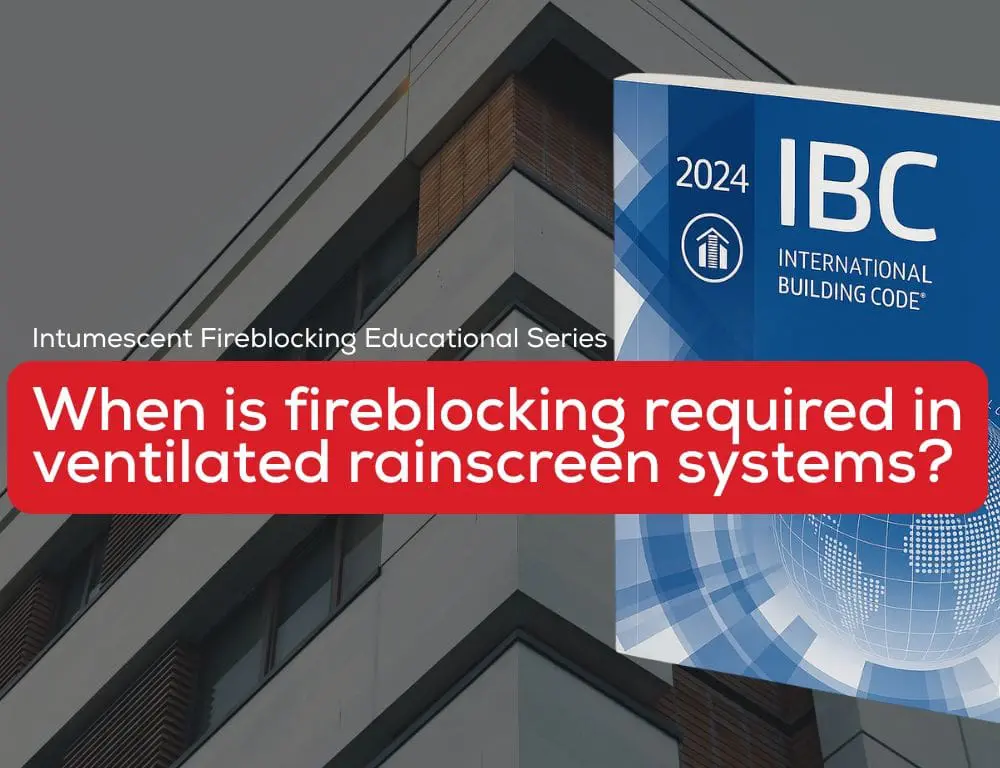
In the 2024 version of the IBC, Ssection 718.2.6 requires fireblocking in the air cavity created by ventilated exterior wall coverings – however, this section has existed in some fashion since 2000. The IBC has always required some form of fireblocking in the exterior cavities created by the exterior wall covering and its architectural trim. Just like any part of the building code, this particular section has been updated over the course of the past several years.
In 2012, ICC adopted changes to the name of the code section and added an additional exception. The name change clarified that it did indeed apply to all exterior wall coverings. The exception codified something that was widely enforced by building officials even though it wasn’t explicit in the language. The exception allowed walls to forgo the fireblocking requirements if the assembly was installed in accordance with a passing NFPA 285 test, so long as that tested assembly did not contain fireblocking.
When my project’s height is below 40 feet, do I need fireblocking?
In the International Building Code (IBC), it requires most buildings over 40 feet containing combustible components to pass an NFPA285 test – however, this is not required in many projects under 40 feet that do not contain foam plastics.
However, walls that do not require the multistory fire test, must install fireblocking in this cavity if they contain combustibles. As a result, a significant portion of walls installed below 40 feet with combustible components must also contain fireblocking in the exterior wall covering assembly
Does my façade application required fireblocking if it houses combustible components, such as subgirts, cladding, insulation,, etc.?
Simply, the answer is yes – and here’s why.
In Section 718.2.6 Exterior Wall Coverings, the section addresses–
“Fireblocking shall be installed within concealed spaces of exterior wall coverings and other exterior architectural elements where permitted to be of combustible construction in Section 1406 or where erected with combustible frames.”
This part addresses that any part of your rainscreen application is composed of a combustible material, whether it be as small as the sub girts to the actual cladding itself, fireblocking is required.
If my project’s cladding system not NFPA 285 compliant, do I need fireblocking?
Let’s examine the code we have been referencing, Section 718.2.6.
In Section 718.2.6 Exterior Wall Coverings, the section has an exception stating–
“Fireblocking shall not be required where the exterior wall covering has been tested in accordance with and complies with the acceptance criteria of NFPA 285. The exterior wall covering shall be installed as tested in accordance with the NFPA 285.”
This exception clearly states the installed assembly is required to be tested with the NFPA285. In conclusion, if your project isn’t compliant with NFPA285 – your project has triggered the fireblocking requirement.
Where do you go from here?
Those who understand high performance wall systems likely already see the conflicts that are going to arise when designing to meet water management requirements and fire requirements. Pay attention to future blogs on how to resolve this conflict.