Discover how the pillars of Detection, Control and Containment work cohesively to protect the lives and properties in our communities.
What is Fire Protection and How Does it Work?
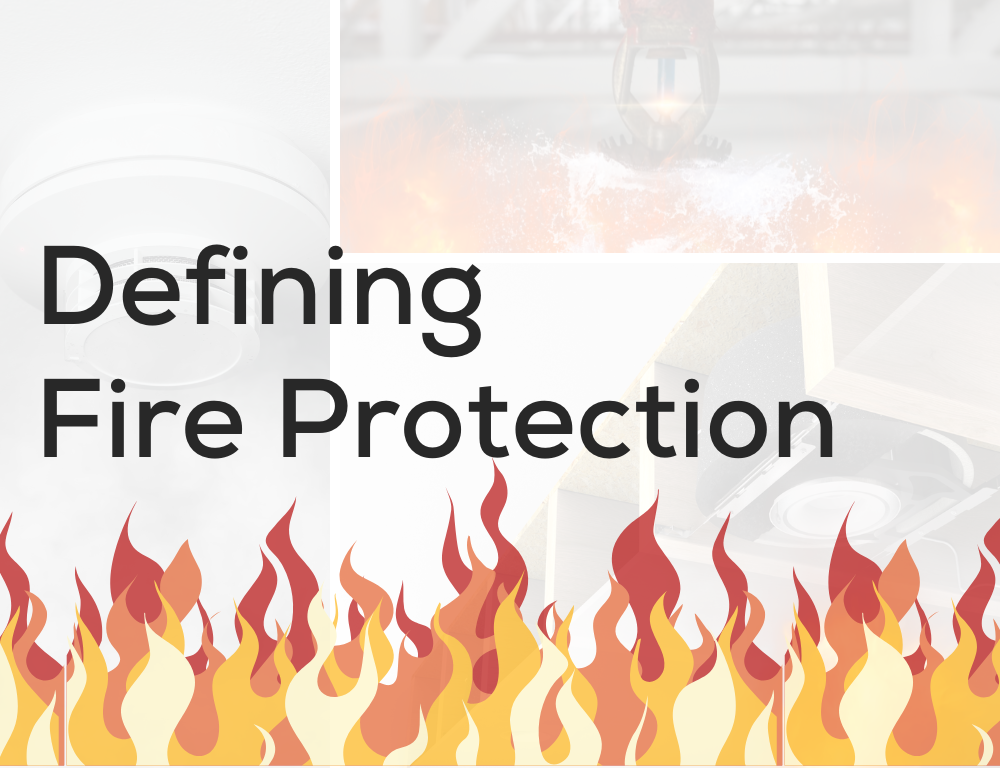
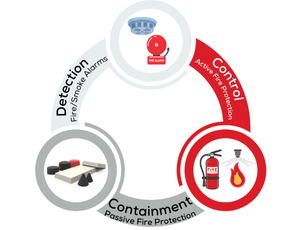
Fire protection is built on three pillars: Detection, Control, and Containment. Here is how they work together to protect lives and property in any building.
Fire protection is the combination of methods, systems, and strategies used to detect, control, and contain fires in buildings. The NFPA defines fire protection as “methods of providing for fire control or fire extinguishment”, but in practice, fire protection goes well beyond a single sprinkler system or smoke detector.
So, how does fire protection work? Effective fire protection relies on three interconnected pillars:
- Detection
- Control
- Containment
Each pillar serves a distinct role, but all three must work together to protect lives and property. Below, we break down what each pillar does, why it matters, and how passive fire protection often serves as the critical last line of defence when active systems fail.
Detect and Alert: The Pillar of Detection
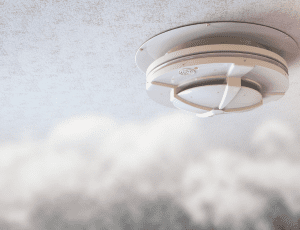
Most people are familiar with smoke detectors in homes and commercial buildings. But Detection covers far more than a single device on the ceiling. Since smoke detectors were introduced in the 1960s, home fire deaths have dropped by nearly 50%, making early detection one of the most effective tools in fire safety.
Detection is the first pillar in any fire protection system because it alerts occupants at the earliest stages of a fire. Whether through a smoke detector, heat sensor, or integrated fire alarm system, these technologies allow for a lengthened evacuation period, giving occupants a head start on exiting the building safely. Detection systems also alert local first responders about an active fire, enabling a faster response to the outbreak.
Key Functions
Swift evacuation: Early warnings trigger prompt evacuation, significantly reducing the risk of injury or death.
Reduced property damage: Detecting fires early helps prevent them from spreading, limiting the extent of property damage.
Continuous monitoring: Fire and smoke detectors provide 24/7 surveillance, which is particularly important in spaces that are unoccupied outside of working hours.
Detection plays a pivotal role in any fire protection system. However, it is not the only pillar that matters.
Taming the Flames: The Pillar of Control
Detection alerts people to a fire, but Control is what actively suppresses it. The most widely recognised forms of fire control are fire sprinkler systems and fire extinguishers. These are key components in controlling a fire regardless of its cause, whether it is a small cooking fire, a large electrical-based fire, or an open flame.
Sprinkler systems and extinguishers are activated by heat, smoke, or flame, allowing them to engage during the early stages of a fire outbreak. This early intervention is what makes the Control pillar so effective at limiting damage and protecting occupants.

Key Benefits
Faster reaction time: Automatic sprinkler systems can begin suppressing a fire within seconds, buying critical time for evacuation.
Effective at any scale: Whether dealing with a small localised fire or a larger outbreak, these systems are designed to diminish the fire in a timely manner.
Reduced smoke inhalation: By controlling the fire early, these systems minimise the production of smoke and toxic gases, which are often more dangerous than the flames themselves.
It is critical that fire control systems are properly maintained in existing structures and correctly specified in new construction projects. If these systems are not functioning correctly, whether in commercial or residential buildings, there is a significant gap in life safety for that community.
The Hidden Guardian of Life Safety: The Pillar of Containment.
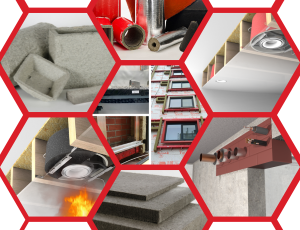
What happens if occupants ignore a smoke detector alarm, or a sprinkler system malfunctions? This is where the third pillar, Containment, becomes essential. Containment is the practice of passive fire protection: slowing and preventing the spread of fire within a building through the use of fire rated materials.
Buildings contain many unprotected openings that can accelerate the spread of fire, ranging from holes caused by fire rated recessed light covers not being specified around recessed light fixtures, openings in cable trays, exterior cavities, and much more. In order to compartmentalise the spread of flames and smoke, specifying properly fire tested and certified solutions, such as firestop foams, sealants, and blocks, in these openings greatly reduces the risk of fire spreading through a building.
For a deeper look at how firestopping products contribute to passive fire protection, read our guide on fire caulk and firestopping solutions.
Core Strengths
Built-in backup: When a sprinkler system or smoke detector fails, passive fire protection steps in to contain the fire outbreak.
Automatic deployment: When a fire is activated, these materials are automatically deployed by the rise in temperature, sealing openings before smoke and fire can travel elsewhere.
Extended response window for first responders: With the fire properly contained, first responders have a longer window to reach the scene, permitting greater protection of lives and property.
Despite these benefits, the pillar of Containment tends to be the least recognised form of fire protection. One of the main reasons is that its solutions are integrated during renovation and new construction projects, often hidden within a building’s ceiling, wall, and floor assemblies. Nonetheless, Containment plays an equally critical role in a fire protection system as Detection and Control, even though it functions primarily in the background.
Completing the Full Circle of Fire Protection.
Detection. Control. Containment. With all three pillars in place, buildings are properly safeguarded from the tragic effects of a fire outbreak. To achieve this level of protection, it is critical that each component is properly integrated into both current and future construction developments, including healthcare and assisted living facilities, data centers, or multi-family housing. By doing so, we establish a framework that not only prevents fire outbreaks but also minimises their potential damage, creating a safer community.
If you are interested in learning more about passive fire protection’s role in the pillar of Containment, schedule a free 1-1 training session with Tenmat’s Mirka Carlson. Click here to schedule your session.