Understand what criteria triggers a special inspection for combustible exterior wall coverings and fireblocking in New York City.
Previously in our Intumescent Fire Block Educational Series, we took a brief glance at the code language of IBC’s Section 718.2.6 Exterior Wall Coverings. To review the details we’ve covered, click here. In this piece, we began to touch on the “equivalent” to this code section, the 2022 New York City Building Code Section 718.2.6 Architectural Trim. It is important to note that this code section has adopted a variety of requirements and exceptions that has changed the practice of constructing cladding projects in the New York City Landscape. If you are interested in learning more about the ins and outs of this section of the code, please schedule a free AIA session with Tenmat’s Mirka Carlson here.
One of the main differences between the IBC and ’22 NYC Building code is NYC’s requirement for a special inspection – specifically, for applications containing combustible cladding systems. Today, we will be examining special inspections, where they are addressed in the 2022 New York City Building Code, who can provide this type of inspection, and how architects are facing this challenge. Now, let’s get started.
In New York City, do I require a special inspection when installing a combustible exterior wall assembly?
Yes – New York City does require a special inspection when working with combustible exterior wall coverings It is important to note that this special inspection is only required for projects located in New York City. Many other jurisdictions also require special inspections for certain exterior wall systems (EIFS is a common example), but the scope and triggers vary by code adoption.
Where in the NYC code does it address the requirement for a special inspection when working with combustible cladding?
When dealing with exterior wall coverings, we often refer to Section 718.2.6 Architectural Trim in the 2022 NYC Building Code Adoption. However, the requirement is not addressed in Chapter 7 – it is addressed in Chapter 17 Special Inspections and Tests.
In Section 1705.16 Combustible Exterior Wall Coverings, it states
1705.16 Combustible Exterior Wall Coverings
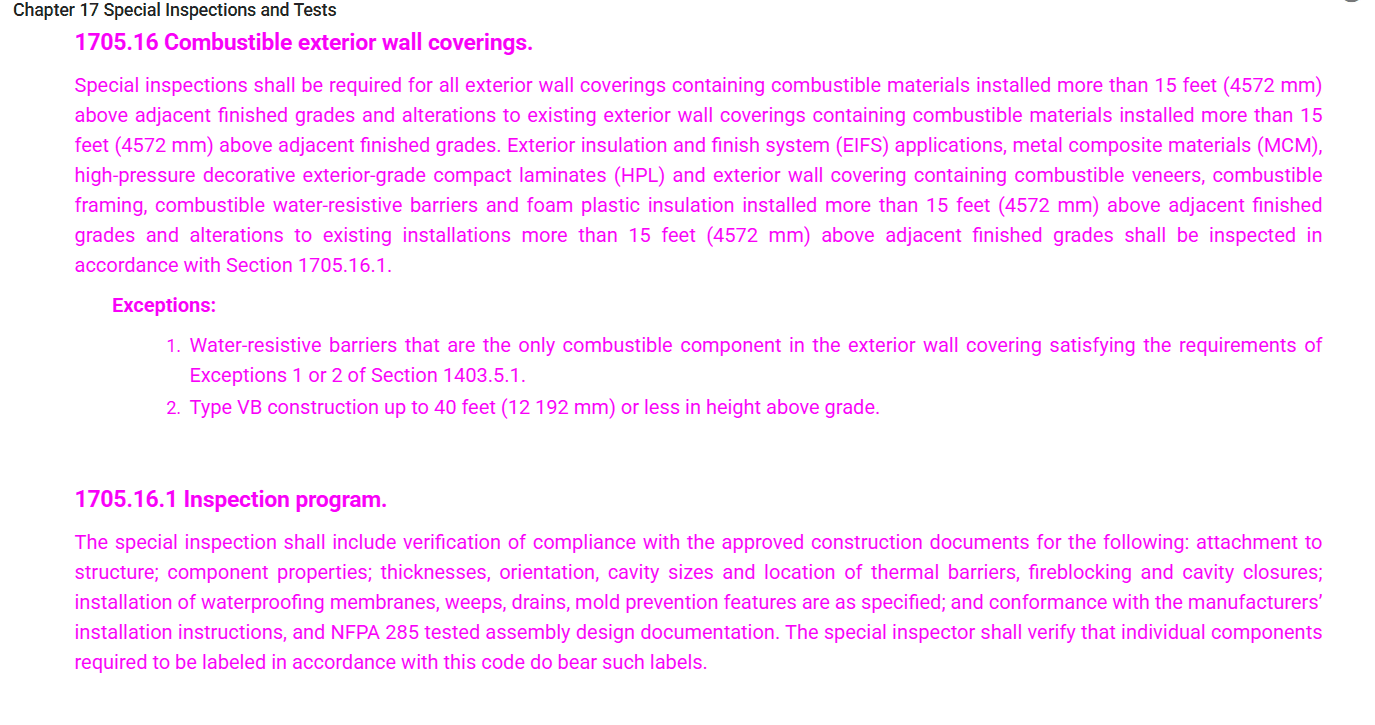
Special inspections shall be required for all exterior wall coverings containing combustible materials installed more than 15 feet (4572 mm) above adjacent finished grades and alterations to existing exterior wall coverings containing combustible materials installed more than 15 feet (4572 mm) above adjacent finished grades. Exterior insulation and finish system (EIFS) applications, metal composite materials (MCM), high-pressure decorative exterior-grade compact laminates (HPL) and exterior wall covering containing combustible veneers, combustible framing, combustible water-resistive barriers and foam plastic insulation installed more than 15 feet (4572 mm) above adjacent finished grades and alterations to existing installations more than 15 feet (4572 mm) above adjacent finished grades shall be inspected in accordance with Section 1705.16.1.
In Figure 1, you can see the full breakdown of the Special Inspection requirements including the code’s exceptions and more. If you have any questions regarding this code, please contact your local jurisdiction to ensure you meet all code requirements.
How does this special inspection affect architects in New York City?
When specifying combustible exterior wall coverings, architects must properly detail exterior wall coverings and include this new special inspection requirement on the list of necessary special inspections. On a positive side, this special inspection can mitigate some of the concerns regarding installation matching the project documents – allowing peace of mind after project completion.
The inspection program shall include verification of compliance with the approved construction documents for the following:
- Attachment to structure,
- Component properties,
- Thicknesses, orientation, cavity sizes and location of thermal barriers, fireblocking and cavity closures,
- Installation of waterproofing membranes, weeps, drains, mold prevention features are as specified,
- Conformance with the manufacturers’ installation instructions, and
- NFPA 285 tested assembly design documentation.
By ensuring you follow these criteria, you’ll help avoid delays for missing special inspections.
Is there a special inspection requirement for fireblocking in a combustible cladding assembly?
When working with certain cladding applications in New York City, the inclusion of fireblocking is required in many conditions, and the special inspection for combustible exterior wall coverings review fireblocking in this system as well. In Figure 2, it displays a snapshot on the requirements for fireblocking in this application. By referring to Chapter 7, it’s safe to say assume that architects should specifically refer to Section 718.2.6 Architectural Trim of the 2022 New York City Building Code.
Instead of independently reviewing Section 718.2.6, Tenmat USA provides an accredited educational course that offers an overview of the section and guidance on the fireblocking solutions most appropriate for these applications. Reach out to info@tenmatusa.com to schedule your free session today!

Who can perform a special inspection for fireblocking in combustible exterior wall coverings?
Although it may be assumed that all building inspections are conducted by the New York City Department of Buildings, special inspections operate differently. Special inspections must be performed by qualified special inspectors on behalf of a DOB registered Special Inspection Agency (SIA), and agencies/inspectors must meet NYC qualification requirements. To assist in locating a qualified agency, use the search tool from Internation Accreditation Service (IAS).
In our case, we will be looking specifically for Special Inspection Agencies in – New York. Click here to review the results from this search. Once, arriving on this page, you will be able to review the certificate(s) that each agency has obtained. In Figure 3, we highlighted what certificate architects would need to look for when trying to locate an agency that can perform a special inspection for their combustible cladding application.
Special Inspections Outside of NYC
Obtaining an approved special inspection for combustible exterior wall covering is required for issuance of the certificate of occupancy. If closeout documentation is incomplete, issuance may be delayed, which can delay project completion. Other jurisdictions may require special inspections for certain exterior wall systems (EIFS is one common example), and requirements vary by code adoption and building conditions. However, this requirement may evolve as the use of cladding systems containing combustible components continues to grow due to their cost‑effectiveness and aesthetic appeal. Correspondingly, the need for clear and comprehensive code provisions governing these assemblies has also increased.
In conclusion, these New York City special inspections may not be relevant to you now; however, this may change in the near future.